Tuesday, May 1, 2007
Final Reflection: Chris
Over the past few weeks we have accomplished a lot. We have hiked, snowmobiled, slid, danced, played, talked, laughed, fell, and all around had a great time in the north. I remember thinking it strange that a culture could be so alike and yet different than our own. I was also surprised when I found out that hip-hop had reached the north and that it was actually having a positive effect within the community. After you walk the entire town and look out from the ridges surrounding it you realize how isolated this small community is, and then you look on the ground, and see a candy wrapper the same as the ones back home. With these kinds of observations you realize how small yet large in other ways the world really is. Over the last week I've made friends who have experienced the north for most of their lives and they've taught me all sorts of things, like how to use my own digital camera which they seemed to enjoy playing with. Being around the GlobalWarming 101 Expedition crew was inspirational, their dedication and commitment to succeeding was an example for everyone of how the human spirit can conquer anything. Overall I've had a great time and aquired memories that will last a lifetime.

Monday, April 30, 2007
Final Reflection By Joe
So as the trip has wound down I have learned quite a bit, not only from within the group but out on my own as well. When we first arrived I didnt quite know what was to be expected way up here in the far north. When we had set out Mr. Johnson had told us that everything is possible and nothing is possible.
When Dalen and I found out that Andy spent a lot of time on the land we were ecstatic. Andy taught Dalen and I many things about being on the land including a plant called heather which the basic fuel for fire starting kind of like our birch bark, and it also makes a fantastic bedding for new born puppies. He taught us everything from building an igloo, to the names of mountains and plants.
It was really interesting to socialize with the young members of the community as well. They were so interested in us and always asking us questions like what our name was, where we were from, and how old we were. When we went out onto the land on Friday I learned the basics of seal hunting and I finally started to realize that something that looked close wasn't all that close and could be 40 kilometers out. The perception of depth is totally different up here because it is so flat and open.
Also while I've been in the Arctic I've learned that plans don't always go according to plan. For instance, we were suppose to leave on Saturday, but couldn't because of weather and there were no flights on Sunday. Also the death in the community basically shut everything down and most plans were cancelled for the day.
The highlight of this trip, for me anyway, was actually two things. The first one was being able to go out on the land so many times with Andy and the group to see the breath taking scenery and meeting up with the Global Warming 101 Expedition once again on the trail. The other was visiting the old Clyde River community on the other side of the bay along with the old cemetery and getting to learn about how it was formed and the reason they moved from where they were to where they are now. I also found a quote by Andy quite interesting. He said, "It's a community that went from the 'stone age' to the technological age, basically overnight" and it really is. It use to be a totally self-sustainable community, but now relies heavily on sea-lift goods which they purchase for the year and recieve in late August early September. This trip has been an extraordinary experience, and will never be able to be duplicated. Even if the school travels to Clyde River again, the events and opportunities that came upon us will never happen again. This truly was a once in a life time experience.
The Final Post,
-Joe
When Dalen and I found out that Andy spent a lot of time on the land we were ecstatic. Andy taught Dalen and I many things about being on the land including a plant called heather which the basic fuel for fire starting kind of like our birch bark, and it also makes a fantastic bedding for new born puppies. He taught us everything from building an igloo, to the names of mountains and plants.
It was really interesting to socialize with the young members of the community as well. They were so interested in us and always asking us questions like what our name was, where we were from, and how old we were. When we went out onto the land on Friday I learned the basics of seal hunting and I finally started to realize that something that looked close wasn't all that close and could be 40 kilometers out. The perception of depth is totally different up here because it is so flat and open.
Also while I've been in the Arctic I've learned that plans don't always go according to plan. For instance, we were suppose to leave on Saturday, but couldn't because of weather and there were no flights on Sunday. Also the death in the community basically shut everything down and most plans were cancelled for the day.
The highlight of this trip, for me anyway, was actually two things. The first one was being able to go out on the land so many times with Andy and the group to see the breath taking scenery and meeting up with the Global Warming 101 Expedition once again on the trail. The other was visiting the old Clyde River community on the other side of the bay along with the old cemetery and getting to learn about how it was formed and the reason they moved from where they were to where they are now. I also found a quote by Andy quite interesting. He said, "It's a community that went from the 'stone age' to the technological age, basically overnight" and it really is. It use to be a totally self-sustainable community, but now relies heavily on sea-lift goods which they purchase for the year and recieve in late August early September. This trip has been an extraordinary experience, and will never be able to be duplicated. Even if the school travels to Clyde River again, the events and opportunities that came upon us will never happen again. This truly was a once in a life time experience.

The Final Post,
-Joe
Saturday, April 28, 2007
Day Twelve Feasts and Country Food
Taste is one of the most fickle human senses. Have you ever noticed how different people’s taste buds can be? Some like it spicy, some like it salty and sweet while other people prefer it as bland as can be. Over the past two days we’ve had a couple chances to distinguish some cultural (and personal) taste preferences.

As a send-off celebration for the Global Warming 101 expedition team the community of Clyde River held a big feast in the community hall. This feast is an extreme understatement of the generosity present within Clyde River. Around the edges of the gym there were tables sagging under the weight of cut-up turkeys, heaping cooking-pans of mashed potatoes, pots of stuffing, and cans of gravy. And in the center were three humongous blue tarps piled with frozen mounds of caribou and char, complete with heads and tails.
We’ll cut to the chase—the taste!! Actually frozen char and caribou is pretty good. And, yes, it’s frozen; the food is considered to be very different when thawed or fresh from the kill. Char tastes a lot like salmon and raw it tastes like sushi without the sticky rice and kelp. Caribou on the other hand is like rich venison and I (Allison) actually prefer it thawed and raw to frozen and raw (the boys all think I’m crazy) because the texture is more pleasant without ice crystals. In all, these country foods are very high in protein and provide a lot of energy, which is greatly needed when living in the arctic.

We’ve also had a chance to eat some cooked country foods. Last night, Geoff Ivany, his girlfriend Amy, and the lovely ladies from the health center made us a meal. There was a hefty pot of seal stew, cooked caribou (“au ju” as Jeff said!), char with lemon and spices, some steamed veggies, mashed potatoes and the Inuit delicacy muktuk (i.e. whale skin with first layer of blubber.) It was fantastic! There was a unanimous cry of delight for the caribou and char which is excellent both cooked and raw and the vegetable dishes complemented the country food well. It was interesting to note the cultural differences in the preparation and serving, too.

Now we’ve gotten a few questions about the muktuk before so we will try to answer them all here. We were told that muktuk can be served raw or cooked and has a better taste the fresher it is. The muktuk we had was raw narwhal; it was an absolute oral riot! We discovered there are three distinct layers in the muktuk. The blubber, which is a light pink, is rather squishy and chewy like cooked squid but tastes like a strong canola oil. The mottled gray-white skin is chewy too but crumbles into little pieces like aged blue cheese; the taste is very mild. In the middle between the blubber and thick skin is a very thin and very tough layer that is like chewing on the bottom of a tennis shoe. Thankfully, it tastes better than a pair of Nikes.
And after dinner we had the immense pleasure of eating Al’s (the RCMP host of Jeff and Chris) splendid apple-raspberry and apple-strawberry pies as well as a gorgeous chocolate-cherry cake. Everything tasted great!! We’re all very grateful for the generosity of our hosts and community; the food was simply marvelous!
-Allison

As a send-off celebration for the Global Warming 101 expedition team the community of Clyde River held a big feast in the community hall. This feast is an extreme understatement of the generosity present within Clyde River. Around the edges of the gym there were tables sagging under the weight of cut-up turkeys, heaping cooking-pans of mashed potatoes, pots of stuffing, and cans of gravy. And in the center were three humongous blue tarps piled with frozen mounds of caribou and char, complete with heads and tails.
We’ll cut to the chase—the taste!! Actually frozen char and caribou is pretty good. And, yes, it’s frozen; the food is considered to be very different when thawed or fresh from the kill. Char tastes a lot like salmon and raw it tastes like sushi without the sticky rice and kelp. Caribou on the other hand is like rich venison and I (Allison) actually prefer it thawed and raw to frozen and raw (the boys all think I’m crazy) because the texture is more pleasant without ice crystals. In all, these country foods are very high in protein and provide a lot of energy, which is greatly needed when living in the arctic.

We’ve also had a chance to eat some cooked country foods. Last night, Geoff Ivany, his girlfriend Amy, and the lovely ladies from the health center made us a meal. There was a hefty pot of seal stew, cooked caribou (“au ju” as Jeff said!), char with lemon and spices, some steamed veggies, mashed potatoes and the Inuit delicacy muktuk (i.e. whale skin with first layer of blubber.) It was fantastic! There was a unanimous cry of delight for the caribou and char which is excellent both cooked and raw and the vegetable dishes complemented the country food well. It was interesting to note the cultural differences in the preparation and serving, too.

Now we’ve gotten a few questions about the muktuk before so we will try to answer them all here. We were told that muktuk can be served raw or cooked and has a better taste the fresher it is. The muktuk we had was raw narwhal; it was an absolute oral riot! We discovered there are three distinct layers in the muktuk. The blubber, which is a light pink, is rather squishy and chewy like cooked squid but tastes like a strong canola oil. The mottled gray-white skin is chewy too but crumbles into little pieces like aged blue cheese; the taste is very mild. In the middle between the blubber and thick skin is a very thin and very tough layer that is like chewing on the bottom of a tennis shoe. Thankfully, it tastes better than a pair of Nikes.
And after dinner we had the immense pleasure of eating Al’s (the RCMP host of Jeff and Chris) splendid apple-raspberry and apple-strawberry pies as well as a gorgeous chocolate-cherry cake. Everything tasted great!! We’re all very grateful for the generosity of our hosts and community; the food was simply marvelous!
-Allison
Finally on the Land
Today (Friday) we finally got out on the land as a whole group. We took four skidoos (snowmobiles) and three kamotiqs with Andy, Geoffrey (the local science teacher), and our new Inuit friend named Sam. Sam showed us many interesting things like a cave that he knew of that is a sheer wall of ice and about about 50 feet deep.  While we were out on the trail he (Sam) was looking for open breathing holes so he could hunt seal. After some searching we saw a black spot out in the distance. We took out the binoculars and it turned out to be a seal. Here is a picture that I (Joe) took through the binoculars. It is the little black dot in the center.
  As we continued along our short 150 Km expedition we had to stop at an iceberg to chip off some ice for water to boil later for dinner.
  While we were out, we got to see some magnificent scenery of mountains and glaciers and we even met up with the Global Warming 101 Expedition Team!

After a quick pitstop at Sam's brother's cabin we headed out even further to visit a galcier, which, according to Sam, use to fill the entire valley. We then headed back to the cabin and we ate a freeze dried dinner and headed home. It took approximately an hour and a half to get home and we arrived about 9:45pm. Dalen and I cleaned up and headed to a community teen dance at C-Hall. We met up with Ida, Ruthie, and some of their friends and danced the night away!
 While we were out on the trail he (Sam) was looking for open breathing holes so he could hunt seal. After some searching we saw a black spot out in the distance. We took out the binoculars and it turned out to be a seal. Here is a picture that I (Joe) took through the binoculars. It is the little black dot in the center.
  As we continued along our short 150 Km expedition we had to stop at an iceberg to chip off some ice for water to boil later for dinner.
  While we were out, we got to see some magnificent scenery of mountains and glaciers and we even met up with the Global Warming 101 Expedition Team!

After a quick pitstop at Sam's brother's cabin we headed out even further to visit a galcier, which, according to Sam, use to fill the entire valley.
 We then headed back to the cabin and we ate a freeze dried dinner and headed home. It took approximately an hour and a half to get home and we arrived about 9:45pm. Dalen and I cleaned up and headed to a community teen dance at C-Hall. We met up with Ida, Ruthie, and some of their friends and danced the night away!
Friday, April 27, 2007
Day 11: The Send Off
On a clear, crisp morning 5 dog teams stand ready on a horizon glistening with ice. Eager to complete the last leg of their journey, the dogs were barking, lunging, and jumping with anticipation. The last of their supplies were loaded onto their sleds and sinched down. This included everything from sleeping bags to dog food and everything in between. After waiting for so long the dogs were finally ready to take off with or without a command. Three out of the five dog teams took off with no command and the mushers were lucky enough to grab hold before it was to late. Some ended up chasing them down with a snowmobile.  After all that excitement the day was filled with interviews and down time along with a fascinating dinner. The dinner was postponed two hours because the town had bingo over the radio, so we didn't eat until nine. The meal was made up of the traditional land food like raw frozen char and caribou which we all tried and only some liked.

 After all that excitement the day was filled with interviews and down time along with a fascinating dinner. The dinner was postponed two hours because the town had bingo over the radio, so we didn't eat until nine. The meal was made up of the traditional land food like raw frozen char and caribou which we all tried and only some liked.
Wednesday, April 25, 2007
Day Ten: A night in an igloo

The view from the Igloo
Today we, Joe and I, had the unique opportunity to build, or at least try, to build an igloo with Andy our host. We went out about 10-15 kms out by Sawtooth mountain near Clyde River. We started the Igloo on Monday but hadn't finished it, so we were determined to finish and sleep in it overnight!


After arriving at the igloo we found that part of it had collapsed, meaning that we again got to try our hand at block cutting and stacking. We were able to finish the igloo after about 5 hours, and decided to stay the night. After a good dinner of pasta and sauce, we turned down the caribou hides, and climbed into the cold sleeping bags.
While building the igloo and in the time after it was finished, we were able to discuss global warming and climate change with Andy. The albedo effect, or the intensity of sun radiation on certain surfaces such as ice and sun, was at the foremost of the conversation. We also discussed the issues surrounding policy involving global warming such as the lack of political will, lack of legislation and the ultimate lack of knowledge.
While on the ride back to the house we were able to see many natural history features such as cornices, giant snow drifts and frozen lakes. The snow drifts that we saw were about 40 feet high and had about 6 foot overhangs or cornices. We also were able to see glacial deposits and giant boulders.

We awoke at about 5:30 am and packed, then set out to return to Andy's home. Joe and I then went to the house that the Steger expedition has been using as a base while in Clyde River. We took part in the meeting and then went to the school to have a photo taken with the school children and the expediton team.
There is a feast planned for this evening so we are hoping to try some land food such as caribou, seal, narwhal (muktuk) and others.
so until later,

two frozen boys (Joe and I) Out
Tuesday, April 24, 2007
Day Nine: The Importance of Wearing Long Underwear
Yes, it is very important (especially during a trip to the Arctic) to wear a set of long underwear below your other daily garments. And I do not say this just for cold weather's sake--you just never know when you will be riding on a caribou-skin lined qamutik with a fan-hitched team of 11 huskies with a skilled Inuit hunter.

So, yes we definitely needed our long underwear yesterday. We had a wonderful surprise in store: a call from John Huston (Global Warming 101 base camp manager) telling us to be out on the ice at four o'clock sharp for a short trip with Simon Qamanirq and his sled dog team. It was 4:06. After rushing down without time to grab extra layers (thank goodness for under armor!) we met up with Simon and his team.
Simon's qamutik (the sled; it has a long raised bed) had a layer of caribou skins and was hitched at the front to the harnesses. The harnesses themselves are made of seal skin cut into long strips and are linked to the lines by walrus bone toggles. They are beautiful and practical. (See Arctic Speak for some good pictures!)
Yet nothing could compare to the feeling of traveling on the sled. The 11 dog team pulled Jeff, Mr. Johnson, Chris, Jason (from National Geographic), Simon and myself along with the big heavy qamutik. The sound was incredible; the snow made a sharp sh-sh-shing as the runners cut neatly through it.

The snowy landscape seemed like the moving backgrounds on old movie sets and cartoons. Looking ahead we saw the fluffy plumes of dog tails and haunches, steadily trotting ahead. Simon, between yelling commands, answered all of Johnson's questions which ranged from "Why don't the dogs get tangled in the lines?" to "How many dog teams are there in town?" to "How do you make a seal skin harness?" It was impressive how smooth the system worked; the dogs were well-trained and knew what they were doing. And we barely glimpsed a drop of the knowledge that Simon has gathered and applied in his life. We are fortunate to have had such an experience with such a knowledgable person. And, indeed, we were fortunate to be wearing our long underwear--although I have to admit the warmest parts of my body were the ones in contact with the caribou skins!
 -Allison (pictured here with her new best friend)

So, yes we definitely needed our long underwear yesterday. We had a wonderful surprise in store: a call from John Huston (Global Warming 101 base camp manager) telling us to be out on the ice at four o'clock sharp for a short trip with Simon Qamanirq and his sled dog team. It was 4:06. After rushing down without time to grab extra layers (thank goodness for under armor!) we met up with Simon and his team.
Simon's qamutik (the sled; it has a long raised bed) had a layer of caribou skins and was hitched at the front to the harnesses. The harnesses themselves are made of seal skin cut into long strips and are linked to the lines by walrus bone toggles. They are beautiful and practical. (See Arctic Speak for some good pictures!)
Yet nothing could compare to the feeling of traveling on the sled. The 11 dog team pulled Jeff, Mr. Johnson, Chris, Jason (from National Geographic), Simon and myself along with the big heavy qamutik. The sound was incredible; the snow made a sharp sh-sh-shing as the runners cut neatly through it.

The snowy landscape seemed like the moving backgrounds on old movie sets and cartoons. Looking ahead we saw the fluffy plumes of dog tails and haunches, steadily trotting ahead. Simon, between yelling commands, answered all of Johnson's questions which ranged from "Why don't the dogs get tangled in the lines?" to "How many dog teams are there in town?" to "How do you make a seal skin harness?" It was impressive how smooth the system worked; the dogs were well-trained and knew what they were doing. And we barely glimpsed a drop of the knowledge that Simon has gathered and applied in his life. We are fortunate to have had such an experience with such a knowledgable person. And, indeed, we were fortunate to be wearing our long underwear--although I have to admit the warmest parts of my body were the ones in contact with the caribou skins!
 -Allison (pictured here with her new best friend)
Monday, April 23, 2007
Day Nine: Bebos and Break Dancing!
This afternoon Chris, Allison, and I (Joe) had the opportunity to interect with some younger students at the Quluaq School. While posting our blogs in the computer room, which was filled with other Inuit students, they humbly asked us to join a thing called "Bebo." This thing called Bebo is very similar to our facebook and/or myspace. These kids were very tech-savvy, and were very willing to help us with any problems we were having while creating our very own Bebo, (mainly Allison who had quite a few issues).
Now just the night before Dalen and I (Joe) were invited over to one of our host families friend's house to meet her son Todd, so we agreed and walked over. When we arrived we were welcomed with Todd spinning on his head in the middle of their living room! After getting to know them a little more I decided to give it a shot, and found out that i could kind of do it. Todd was very informative and helped me get the right motions down to make it as easy as possible.
And it's not just Todd, there's actually a talented group of students who have formed a hip hop group. So later that evening we attended a hip-hop competition at the C-Hall it's kind of like a Community Center, and we watched a lot of young people and a couple others that were adults out on the floor break dancing. After a while of us watching Todd came up to me and told me to come out and join him and John out on the floor. Here is a picture of me attempting to do a head spin!
Now just the night before Dalen and I (Joe) were invited over to one of our host families friend's house to meet her son Todd, so we agreed and walked over. When we arrived we were welcomed with Todd spinning on his head in the middle of their living room!
 After getting to know them a little more I decided to give it a shot, and found out that i could kind of do it. Todd was very informative and helped me get the right motions down to make it as easy as possible.
And it's not just Todd, there's actually a talented group of students who have formed a hip hop group. So later that evening we attended a hip-hop competition at the C-Hall it's kind of like a Community Center, and we watched a lot of young people and a couple others that were adults out on the floor break dancing. After a while of us watching Todd came up to me and told me to come out and join him and John out on the floor. Here is a picture of me attempting to do a head spin!

Day Eight: "Broken Promises"
The death of one of the community elders has put many events on hold but last night we still had a potluck with the Global Warming 101 crew at Lesley and Dawn’s. The food was excellent: broiled char, some Minnesota wild rice and a variety of tasty salads (and dessert was just as good; even ice cream!)
Here's the dinner-dessert-movie crew. From left to right, back to front: Abby Fenton, Ed Veisturs, Lesley, Dawn, Jeff, Allison (me), Sam Branson, Chris, Will Steger, Mr. Johnson and Elizabeth Andre. Not pictured is Gerry S. our wonderful photographer.

After dinner, we watched a documentary called “Broken Promises.” It was about the Inuit relocation programs of the 1950’s. The remote northern arctic was a prime location for a nuclear stronghold during the Cold War and Canada was seeking to populate as much of its northern regions as possible to strengthen their sovereignty of the region. At the same time many Inuit communities were put in an economic crux. The families’ main income was trading furs for store credit but as the prices of furs fell and the stores extended credit they fell deeper and deeper into debt. The hard times drove the government to start relief programs but they were reluctant to put too much money towards relief funds. So, in an effort to solve two problems the government came out with a statement claiming the best way to get the Inuit to be an active and beneficial part of the Canadian economy was to put them back in their traditional lifestyles. This was achieved by relocation into the most northern islands of Canada. The Inuit were lead to believe that the place they were to be moved to was even better than their current home with more game and resources. But Grise Fiord and Cambridge Harbor are in the high arctic; there was less game to hunt, 24-hour darkness during the winter, much colder conditions and no store from which they could purchase supplies. The relocation program stated that at the end of the year any family wishing to return could. The families did but the reports claimed that everyone was content except for the group’s leader who was upset by the fact that he couldn’t see very far outside his tent during the winter. While the communities were later strengthened with the development of a school and other programs a statement at the end of the movie claimed that no official apology from the government was ever given.
Here's a "little" after dinner entertainment...Mr. Johnson on the mandolin!

Here's the dinner-dessert-movie crew. From left to right, back to front: Abby Fenton, Ed Veisturs, Lesley, Dawn, Jeff, Allison (me), Sam Branson, Chris, Will Steger, Mr. Johnson and Elizabeth Andre. Not pictured is Gerry S. our wonderful photographer.

After dinner, we watched a documentary called “Broken Promises.” It was about the Inuit relocation programs of the 1950’s. The remote northern arctic was a prime location for a nuclear stronghold during the Cold War and Canada was seeking to populate as much of its northern regions as possible to strengthen their sovereignty of the region. At the same time many Inuit communities were put in an economic crux. The families’ main income was trading furs for store credit but as the prices of furs fell and the stores extended credit they fell deeper and deeper into debt. The hard times drove the government to start relief programs but they were reluctant to put too much money towards relief funds. So, in an effort to solve two problems the government came out with a statement claiming the best way to get the Inuit to be an active and beneficial part of the Canadian economy was to put them back in their traditional lifestyles. This was achieved by relocation into the most northern islands of Canada. The Inuit were lead to believe that the place they were to be moved to was even better than their current home with more game and resources. But Grise Fiord and Cambridge Harbor are in the high arctic; there was less game to hunt, 24-hour darkness during the winter, much colder conditions and no store from which they could purchase supplies. The relocation program stated that at the end of the year any family wishing to return could. The families did but the reports claimed that everyone was content except for the group’s leader who was upset by the fact that he couldn’t see very far outside his tent during the winter. While the communities were later strengthened with the development of a school and other programs a statement at the end of the movie claimed that no official apology from the government was ever given.
Here's a "little" after dinner entertainment...Mr. Johnson on the mandolin!

Sunday, April 22, 2007
Infrastructure in the North

Clyde River, like many other northern communities are not built like how we in the south build our towns. Because of their remote location all building materials, even the wood, must be shipped in from the south, and this raises the cost of building anything considerably. The roads are mostly gravel and mud, with a few paved roads in the larger communities. In Clyde River every house has its own water tank and sewer tank, both of which get pumped every other day. The water comes from a spring in the hills above the town. And the sewer and trash end up in the city dump aways outside the town. It's the norm for each house to have its own fuel tank for its furnace and hot water heater. Houses are built on deep foundations that go deep into the permafrost, the layer of ice and soil that doesn't melt annually. They are also up of the ground to get them out of the massive snow drifts that get over 10ft thick in most winters. It also keeps the house dry in the muddy spring that the north experiences. Houses are outfitted with extra insulation and even have insulation in the floor. Their is very little public transit in the north, partially because the town are so small and people are used to walking. Iqaluit has a few taxis and schools buses, and Clyde River has a single taxi. Electricity comes from a few diesel generators located near the cities fuel depot. The town has volunteer fire department and a small RCMP (Royal Canadian Mounted Police) detachment supplemented by locals. Food is shipped in every 8 months in bulk and the planes that come in carry fresh produce every few days.
Saturday, April 21, 2007
Day Seven: A Walk Through Clyde River
Today started with absolutely gorgeous weather when I woke up around 9:00am. But unfortunately an elder of the community around the age of 50 had a heart attack overnight while he was out hunting, so the dog sled races were cancelled for today. However our host family Andy and his wife Melanie had something planned for Dalen and I. Andy was suppose to go the flow edge to go kayaking with some hunters but it was to windy at 7:00am so he didn’t go. The flow edge is where the unfrozen sea meets the frozen section and is an extremely dangerous area because the ice can move without you even knowing it and polar bears are quite common there because of the seal population. Andy said that you can be out on the ice for 6 hours and start to return and the piece of ice that was once connected is no longer connected and next thing you know you have 10 kilometers of water between you and the land. So instead he (Andy) was going to take Dalen and I out on cross-country skis to look at the land and build an igloo, but the weather decided to be cruel once again and became really cloudy and windy so the plan was shattered. After contemplating whether or not to go we decided to just go on a walk with his dog Tuni around the town.
While we were out on our walk Andy gave us a lot of information about the land and how the ice freezes. Up here the rivers freeze before the seas do because of the wind, which keeps the sea quite violent and makes it very difficult for it to freeze, so it could be -35 and it could still be in its liquid stage. If the wind dies down though it will freeze rapidly. It could freeze up to a foot just over night! While we walked across the rivers we noticed chunks of ice that were jutted up above the land so Andy explained that underneath of the ice there are rocks that in the river and the open water splashes over the rock and freezes, so this continues for a while and eventually it will look like a little ice mountain and it will pop open in the center so it looks like an ice volcano. This here is one of the many ice mountains/volcanoes we saw while on our walk.
We then went onto the ice and we had a chance to stop at the dog pens and see all of the communities' dogs. We stopped at one pen and a mom and her pups came out with a warm visit and I made a few new friends! We also noticed lots of seal and narwhal carcasses out in the pens, those two foods are what the dogs eat while out on the ice.

While we were out on our walk Andy gave us a lot of information about the land and how the ice freezes. Up here the rivers freeze before the seas do because of the wind, which keeps the sea quite violent and makes it very difficult for it to freeze, so it could be -35 and it could still be in its liquid stage. If the wind dies down though it will freeze rapidly. It could freeze up to a foot just over night! While we walked across the rivers we noticed chunks of ice that were jutted up above the land so Andy explained that underneath of the ice there are rocks that in the river and the open water splashes over the rock and freezes, so this continues for a while and eventually it will look like a little ice mountain and it will pop open in the center so it looks like an ice volcano. This here is one of the many ice mountains/volcanoes we saw while on our walk.

We then went onto the ice and we had a chance to stop at the dog pens and see all of the communities' dogs. We stopped at one pen and a mom and her pups came out with a warm visit and I made a few new friends!
 We also noticed lots of seal and narwhal carcasses out in the pens, those two foods are what the dogs eat while out on the ice.

Day 7: Food in the Arctic
How much would you pay for a bag of m&ms...does four bucks sound too much for a palm sized bag...try more like six. But what about a package of flour, or a half kilo of vegetables, or a loaf of bread...like the m&ms, food necesities are priced on an expensive scale. Because of the location of Clyde River, packaged goods are really expensive. Most people get a lot of their winter supply from the sealift which comes in September. You put in an order earlier in the year then have a giant crate shipped to your house. The two women who are hosting me (Dawn and Lesley) were telling me about the process. Unless you have a truck, the crate is moved by the shipping company to your front lawn for a price. once the crate is there all the neighbors come out to help unload; everyone pitches in even if it isnt their stuff.
Helping out is a characteristic of food distribution in town as well. Affording what your family needs and getting enough can be a challenge, and the community helps out. For example, if someone gets a lot of arctic char on a trip you may come home to find a couple left on your doorstep. This reflects how important subsistence living is for the people here. Besides country food (caribou, char, seal, polar bear, dog, cod, etc.) there isnt a lot else. So there is a lot of food shipped in...with a weighty price tag.
Helping out is a characteristic of food distribution in town as well. Affording what your family needs and getting enough can be a challenge, and the community helps out. For example, if someone gets a lot of arctic char on a trip you may come home to find a couple left on your doorstep. This reflects how important subsistence living is for the people here. Besides country food (caribou, char, seal, polar bear, dog, cod, etc.) there isnt a lot else. So there is a lot of food shipped in...with a weighty price tag.
Some Answers
What kinds of music do the students listen to?
The students up here listen to basicly the same music that we do. Its strange hearing a song that you can understand the words fully, but when the show host starts talking in French or Inuktituk. The kids are especially into the modern music scene, and cultural music plays a lesser role. Recently a hip-hop craze has swept the community and actually had a positive effect on the community. This is because its given the kids of the community to do with their time, kept them out of trouble, and the kids even settle disputes with "dance-offs" or "challenges" as they are called.
How much has outside cultures influenced the people there?
The influence outside cultures have is immense. As stated above our music has infiltrated all levels of their society. And as with many other cultures that come into contact with the modern world, drugs and alcohol are new issues that their society must now deal with. Our outside cultures provide them with thier products, so its not uncommon to see Inuits with western brand names all over them. The concept of money and property rights have forced them to follow our laws and find ways to make money.
Do they completely rely on their own resources or do they have any exports/imports? if so, what are they?
Their primary exports are animal products and art. The only other industry in this region is tourism and even that is an unstable source of income at best. They import everything, besides from what they can get from the land, ie meat. Principle imports are food, cloths, vehicles, and shelter.
Do the kids at the school have any kind of different subjects they learn, like about thier heritage, culture, survival?
From what we know so far they currently have little formal education into their own culture. What they do have is embedded into their cirriculum and this is in addition to what they learn from their elders and parents. If they were to travel south their are schools that do teach such things but very few are able to do this. In the next few years there is planned to be the creation of the "Nunuvut Cultural School" in Clyde River. When it comes it will be a positive influence on the community, bringing people and money into the comunity.
The students up here listen to basicly the same music that we do. Its strange hearing a song that you can understand the words fully, but when the show host starts talking in French or Inuktituk. The kids are especially into the modern music scene, and cultural music plays a lesser role. Recently a hip-hop craze has swept the community and actually had a positive effect on the community. This is because its given the kids of the community to do with their time, kept them out of trouble, and the kids even settle disputes with "dance-offs" or "challenges" as they are called.
How much has outside cultures influenced the people there?
The influence outside cultures have is immense. As stated above our music has infiltrated all levels of their society. And as with many other cultures that come into contact with the modern world, drugs and alcohol are new issues that their society must now deal with. Our outside cultures provide them with thier products, so its not uncommon to see Inuits with western brand names all over them. The concept of money and property rights have forced them to follow our laws and find ways to make money.
Do they completely rely on their own resources or do they have any exports/imports? if so, what are they?
Their primary exports are animal products and art. The only other industry in this region is tourism and even that is an unstable source of income at best. They import everything, besides from what they can get from the land, ie meat. Principle imports are food, cloths, vehicles, and shelter.
Do the kids at the school have any kind of different subjects they learn, like about thier heritage, culture, survival?
From what we know so far they currently have little formal education into their own culture. What they do have is embedded into their cirriculum and this is in addition to what they learn from their elders and parents. If they were to travel south their are schools that do teach such things but very few are able to do this. In the next few years there is planned to be the creation of the "Nunuvut Cultural School" in Clyde River. When it comes it will be a positive influence on the community, bringing people and money into the comunity.
Friday, April 20, 2007
Day 6: Finally Arrived in Clyde River

Our flight took off this morning at 8:30 sharp and lasted about an hour and a half again we were flying first air and we recived yet another complimentary breakfast!! As we got closer to Clyde River the view outside of the plane window was astonishing but this time (as Allison would like to add) the clouds looked more like clotted cream this time around.

When we arrived at Clyde River airport we were welcomed by Will steger and his expedition team and the Canadian Mounties who gave us a ride into town. After splitting up into our host families' houses which worked out quite well with our personalities! While we (Mr. Johnson, Dalen, Jeff, Chris, and I) were feasting on lasagna and hashbrowns, Allison was being interviewed with Will Steger for a radio broadcast which will be aired on a local Minnesotan radio station this weekend. So you should all keep an ear open! We then went to watch an igloo building contest between Simon and Luki who are two of the inuit members of the Will Steger expedition.


While the igloos were being constructed we met some local youngsters and jumped off of 10 foot high snow walls and they showed us some pretty cool tricks!
 The principal of the school gave us a tour of the town and met up with some more local kids that were ice skating on the packed snow which we thought was pretty interesting.
Thursday, April 19, 2007
SES Earth Day: Background info a.k.a What is Baffin?
Good Morning S.E.S I hope you are enjoying your wonderful 75-degree weather. Hopefully we won't be talking to you today because we will be on the plane to Clyde River. We have spent the last two full days in Iqaluit now and have had plenty of time to do some general research on Baffin Island for you back home. Baffin Island is in a territory called Nunavut (Noon-ah-voot). For those of you who have forgotten your Canadian geography, this massive country is made up of provinces and territories. A province is similar to a state in the U.S.; a territory is like a province BUT with less power. For example, Nunavut has less control than other provinces like Ontario over natural resource extraction. In fact, mining is a very hot topic right now because it is facing a lot of social opposition but is still needed for economic development. But back to Nunavut, as a territory it is made up of 57% Inuit and 43% non-aboriginal. Along with this the territory is trilingual: 46% speak English and French, 54% speak Inuktitut (ih-nahk-tih-tuck).

So, you may be wondering, "where in the world is Baffin Island?" Well, it is the large dehydrated kidney bean shaped island to the west of Greenland. About half of Baffin is north of the Arctic Circle at 66 degrees north latitude. Clyde River (which is where we are hopefully flying to at this very moment!) lies at 70 degrees north. Those of us in Minnesota we get used to calling ourselves "northern" but here Minnesota is actually considered "down south."
Baffin Island is a beautiful combination of stark tundra, rocky hills and deep fjords. For those who don't know, a fjord is a long inlet usually with steep cliffs and a narrow waterway. Because of where Baffin is they have some pretty cold seasons; the "-" negative sign is used quite often. But what makes it really cold is the wind. For example, yesterday the winds in Clyde River were up to 60 mph; this is pretty normal for late winter here. Yesterday, our cabbie was joking around and said, "Baffin has five seasons--the fifth is pothole season!"
This too is pretty typical of the culture on Baffin; everyone loves a good laugh and is very friendly. It is also part of the culture here "Up North" to practice a zenful go-with-the-flow attitude. For example, when your plane flight gets cancelled...you just hole up for the night, eat a good dinner and try again tomorrow with a smile on your face. I think we've got the hang of this...

HAPPY EARTH DAY EVERYONE!!

-Joe and Allison

So, you may be wondering, "where in the world is Baffin Island?" Well, it is the large dehydrated kidney bean shaped island to the west of Greenland. About half of Baffin is north of the Arctic Circle at 66 degrees north latitude. Clyde River (which is where we are hopefully flying to at this very moment!) lies at 70 degrees north. Those of us in Minnesota we get used to calling ourselves "northern" but here Minnesota is actually considered "down south."
Baffin Island is a beautiful combination of stark tundra, rocky hills and deep fjords. For those who don't know, a fjord is a long inlet usually with steep cliffs and a narrow waterway. Because of where Baffin is they have some pretty cold seasons; the "-" negative sign is used quite often. But what makes it really cold is the wind. For example, yesterday the winds in Clyde River were up to 60 mph; this is pretty normal for late winter here. Yesterday, our cabbie was joking around and said, "Baffin has five seasons--the fifth is pothole season!"
This too is pretty typical of the culture on Baffin; everyone loves a good laugh and is very friendly. It is also part of the culture here "Up North" to practice a zenful go-with-the-flow attitude. For example, when your plane flight gets cancelled...you just hole up for the night, eat a good dinner and try again tomorrow with a smile on your face. I think we've got the hang of this...

HAPPY EARTH DAY EVERYONE!!

-Joe and Allison
Day 5: Part II: The Blizzard of 07 - Iqaluit

We decided to call the airport before we hauled all of our gear outside and called a cab to haul us and the gear down to the airport just to make sure the flight was still taking off. They said yes so we called our cabs and loaded them up. When we arrived...yes you guessed it, the flight was cancelled. But welcome to the North. This stuff happens often up here, and you just have to kind of go with it, like i say... "just go with the flow, whatever happens, happens", so we are staying at the Inukshuk high school for hopefully only one more night and then its off to Clyde we go. So the plan for today is just kind of a day of relaxation, talk with students, write some blogs, do some journaling, and explore the town a little more. And look, Jeff's already started!

Day 5: Part I: The Blizzard of 07 - Iqaluit
Today started out like any other day waking up in an Inuit high school in a fort that Jeff and I had constructed with pieces of cardboard and crates that we had found. We ate our delicious breakfast of toast, cereal, juice and breakfast bars, then...we looked outside, and couldn't see the town. It was a blizzard. We all went back to the room to put on our winter jackets and mittens like we were back in elementary school and ran outside. We got to the other side of the school and were blown back by the powerful winds. We had approximately 6 inches of white fluffy snow and up at Clyde River which is under a blizzard warning, the winds are up to 61kph. We may not leave for Clyde River today due to the weather conditions but there may still be hope. We've heard that the weather was suppose to clear up sometime this afternoon and we may be able to catch a flight if the weather in Clyde decides to cooperate. These pictures are a comparison of yesterdays weather to todays.


Wednesday, April 18, 2007
Day Four: Art, CITES, and Bird Watching
Yes, these are related! (At least in an Iqaluit art shop they are.) Following a group trip to post blog entries at the airport this morning we went into the Iqaluit Fine Arts Studio for a little look-see. And what a look-see it was! They have a fine array of traditional carved pieces, arctic photography, linograph prints and even a beautiful pair of handmade seal skin gloves which, according to the CITES agreements, would lead to confiscation and heavy fines upon entrance back into the U.S. For those of you who don’t recall CITES it is the Convention on International Trade of Endangered Species of flora and fauna and it does it job well in protecting species that are deemed threatened (thank you Mr. Hage…I seem to have remembered your lesson from this fall!) What is controversial, especially in areas like Baffin Island, is the use of endangered species by native cultures which creates a loophole in the CITES system. For example, seal provides a major portion of the resources for the Inuit (including skin for making good early spring gloves). While the members of the native community are allowed to harvest endangered species, their international trade is prohibited. So if I brought back those lovely mittens, customs would take them away and fine me. But talking with the shop owner revealed another pretty serious catch: NATIONAL trade isn’t as closely regulated. While taking seal skin gloves from Baffin would be highly illegal getting a pair from Alaska wouldn’t be nearly as difficult. But then again, in the words of the shop owner, “All you have to do is pay the $10 to have someone else cross the river!” (A little “smuggler’s humor” he added!). But don’t worry…the $150 price tag deterred me quite well.
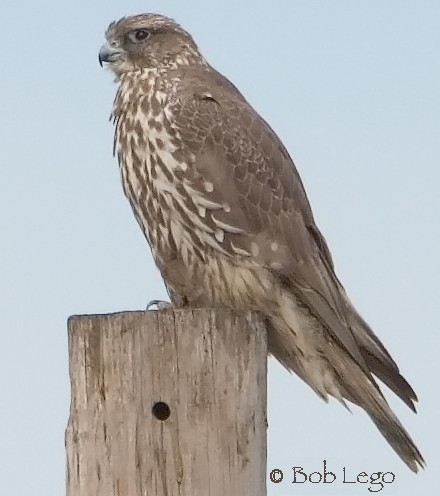
Another nice tidbit we learned from the shop owner catered to one of my favorite outdoor activities: bird watching. It has now become one of my goals not to leave Baffin Island without seeing a gyrfalcon. A gyrfalcon is a large bird of prey with a wingspan up to 5 ft and a very ornery attitude. They are common in the mountainous arctic terrain of Baffin’s east coast and they are most often found by the territorial shrills they screech at anything that comes too close. Or the giant shadow they cast over the ground when searching for prey. As many birds of prey are inclined to look, gyrfalcons are highly dignified. In fact, their name derives from a Scandinavian term for “spear” because of the dark pointed patterns on their chest feathers. The shop owner was positively giddy while telling us about the time he saw a gyrfalcon make off with an arctic hare (which is the size of a small-medium dog.) So hopefully, Jeff will get to see his polar bear and I will get to see a gyrfalcon!

Another nice tidbit we learned from the shop owner catered to one of my favorite outdoor activities: bird watching. It has now become one of my goals not to leave Baffin Island without seeing a gyrfalcon. A gyrfalcon is a large bird of prey with a wingspan up to 5 ft and a very ornery attitude. They are common in the mountainous arctic terrain of Baffin’s east coast and they are most often found by the territorial shrills they screech at anything that comes too close. Or the giant shadow they cast over the ground when searching for prey. As many birds of prey are inclined to look, gyrfalcons are highly dignified. In fact, their name derives from a Scandinavian term for “spear” because of the dark pointed patterns on their chest feathers. The shop owner was positively giddy while telling us about the time he saw a gyrfalcon make off with an arctic hare (which is the size of a small-medium dog.) So hopefully, Jeff will get to see his polar bear and I will get to see a gyrfalcon!
Day Three: The Narwhal Legend
Our new favorite airline is First Air and for good reason. Not only did we get the standard complementary beverage but also hot towels for our faces, a pretty tasty breakfast and warm hot chocolate chip cookies (you better believe the chocolate was perfectly gooey!) But nothing could top the sight of arriving in Baffin Island: the sea ice looked like rebel blue gingham that had lost its pattern but not its simplistic beauty. The fine blue lines of the water crisscrossed and broke up the stark white of the flat ice. With our faces nearly pressed against the glass and our jaws down to our fold-up tabletops we watched as the austere glory of the white horizon rose into the rippling curves and jagged landscape of Baffin Island. Blue and white zigzags had given away to black rocks peeking through a thick silvery sheet of white. It was everywhere! The clouds were gossamer curtains hanging in wisps over the falsely calm carpet of frosted tundra and majestic fiords. I wish you all could see it—nothing can compare to that first glimpse of pure beauty.
(by the way, Joe wants everyone to know that he had nothing to do with writing that last bit of poetic verse...in fact, I think he was asleep--Allison)
But before our first sight of Baffin there was the three hour flight out of Ottawa. Fortunately there was a copy of “Above and Beyond: Canada’s Arctic Journal” in the seat pocket (Joe, again, was still asleep.) And even better, there was an article on narwhal tusks that detailed an interdisciplinary study of science and native knowledge. One of the Inuit men with the study told the legend of the narwhal’s tusk. In short, a blind boy’s mother treats him unfairly after he helped protect them from a polar bear. But when he and his sister went down to the lake the blind boy was taken up by a loon and carried off underwater only resurfacing three times. On the third resurface the blind boy was suddenly able to see. The loon took him home and with his new sight the boy could see how his mother had wronged him. The next time the family went to the bay to spear beluga, the mother asked the son to spear a small one for her. Instead, the boy speared a big one and his mother was dragged under. She couldn’t pull herself free and as she stayed under her hair twisted into the spiral of the narwhal tusk. To this day, narwhal are still surrounded by beluga just as the blind boy’s mother was.
While I enjoyed this aspect of the article what I found exceptional was its connection to Inuit culture and how it related to scientific studies taking place in the north Polar Regions. The legend itself reflects the importance of respect in Inuit culture, especially for those who are more defenseless. This respect also emphasizes the sensitivity of the relationship between the Inuit and foreign researchers. As the author Dr. Martin Nweeia states, he “realized from the beginning of [his narwhal research] that the Inuit are the people who know the narwhal and environment best” However, despite its validity in scientific communities, native knowledge is a vastly untapped resource. Dr. Nweeia and others have come to realize how complementary scientific and native knowledge are. And this integrative system is founded on mutual respect.
(by the way, Joe wants everyone to know that he had nothing to do with writing that last bit of poetic verse...in fact, I think he was asleep--Allison)
But before our first sight of Baffin there was the three hour flight out of Ottawa. Fortunately there was a copy of “Above and Beyond: Canada’s Arctic Journal” in the seat pocket (Joe, again, was still asleep.) And even better, there was an article on narwhal tusks that detailed an interdisciplinary study of science and native knowledge. One of the Inuit men with the study told the legend of the narwhal’s tusk. In short, a blind boy’s mother treats him unfairly after he helped protect them from a polar bear. But when he and his sister went down to the lake the blind boy was taken up by a loon and carried off underwater only resurfacing three times. On the third resurface the blind boy was suddenly able to see. The loon took him home and with his new sight the boy could see how his mother had wronged him. The next time the family went to the bay to spear beluga, the mother asked the son to spear a small one for her. Instead, the boy speared a big one and his mother was dragged under. She couldn’t pull herself free and as she stayed under her hair twisted into the spiral of the narwhal tusk. To this day, narwhal are still surrounded by beluga just as the blind boy’s mother was.
While I enjoyed this aspect of the article what I found exceptional was its connection to Inuit culture and how it related to scientific studies taking place in the north Polar Regions. The legend itself reflects the importance of respect in Inuit culture, especially for those who are more defenseless. This respect also emphasizes the sensitivity of the relationship between the Inuit and foreign researchers. As the author Dr. Martin Nweeia states, he “realized from the beginning of [his narwhal research] that the Inuit are the people who know the narwhal and environment best” However, despite its validity in scientific communities, native knowledge is a vastly untapped resource. Dr. Nweeia and others have come to realize how complementary scientific and native knowledge are. And this integrative system is founded on mutual respect.
Day Four: Visitors Center
The inukshuit has many different names which stand for many different things. The basic set up of an inukshuit is to take some stones (big or small) and make it resemble a person to show that some has been there before and that it is a path. Another type is called a “tukipkota” which is made up of a few stones stacked on top of each other beside a lake shows that there is a lot of fish in that specific region. The last main inukshuit is called a “hakamuktak” and can be seen from miles inland along the coastline and is in the form of a man and marks a place where caribou are taken. This one here is a picture of a hakamuktak. 
Nunavut’s rich culture is tied tightly with it’s past. While we are on Baffin we could have many opportunities to sit in on some traditional cultural activities such as community feasts, dancing along with traditional music, and being able to watch stone carving and to observe the traditional clothing. These things all find their roots and reflect early Inuit songs, stories, and spiritual beliefs. During the winter seal blubber was an essential necessity for the Inuit community. Throughout the year it would be collected in hide bags or under rock piles in preparation for winter. Then women then pounded small pieces of blubber to be used as cooking or lighting.
In early times, as winter approached these territories women started to work feverishly to prepare the necessary clothing, it also signaled that it was time once again to abandon their skin tents and move back to the shore in favor of qaamuks (sod) which are lower to the ground made up of stones and dirt. These were not as favorable as the igloo shelters because they were not as snug, clean or airy. These two shelters were built along the coastline, in the winter season because seal hunting was much easier than say arctic fox, which are, located more inland. The men were also hard at work at the first sign of winter. They started to repair their sealing weapons and coat their qomatiq (sled) with mud and ice for easier travel over the harsh sea ice.

Nunavut’s rich culture is tied tightly with it’s past. While we are on Baffin we could have many opportunities to sit in on some traditional cultural activities such as community feasts, dancing along with traditional music, and being able to watch stone carving and to observe the traditional clothing. These things all find their roots and reflect early Inuit songs, stories, and spiritual beliefs. During the winter seal blubber was an essential necessity for the Inuit community. Throughout the year it would be collected in hide bags or under rock piles in preparation for winter. Then women then pounded small pieces of blubber to be used as cooking or lighting.
In early times, as winter approached these territories women started to work feverishly to prepare the necessary clothing, it also signaled that it was time once again to abandon their skin tents and move back to the shore in favor of qaamuks (sod) which are lower to the ground made up of stones and dirt. These were not as favorable as the igloo shelters because they were not as snug, clean or airy. These two shelters were built along the coastline, in the winter season because seal hunting was much easier than say arctic fox, which are, located more inland. The men were also hard at work at the first sign of winter. They started to repair their sealing weapons and coat their qomatiq (sled) with mud and ice for easier travel over the harsh sea ice.
Monday, April 16, 2007
Day Two: Sivuniksavut Students
After our afternoon down time we walked the streets of Ottawa to the Sivuniksavut students classroom about four blocks away from the hostel. We arrived and introduced each other and told each other where we were from and the range of these students was amazing! They came from everywhere from Gris Fjord which is the furthest northern community of the participants with a latitude of 76.42 degrees and a longitude of 85.92 degrees to Pangirtung which lays at 66 degrees latitude and 65 degrees longitude. After we got to know each other and had some time for some question and answer along with some brief discussions about some hot topics we ordered some pizza and traded stories with individuals. After dinner they performed some traditional as well as modern cultural dances and songs. We had the opportunity to participate in a traditional dance which represents a mothers love for her son. Then we enjoyed some traditional games! The first game we played was leg wrestling, you lay side by side with your opponent heads on opposite ends. You link legs with that person (in this case Dalen vs. Joe) and try to flip them over using only your linked legs.
 Next was a type of arm wrestling where you sit with your legs linked and you hook your arms at the elbow and try to pull the other person towards you and as soon as the other persons arm goes straight the match is over and you have won.
  We then were introduced to this one game called "Cheek Pull" a picture is worth a million words in this case... Yes that is Joe with his finger in the teachers mouth and his in Joe's. Then on the count of three we pulled on eachothers cheek and whoever gave up first lost.
After all that excitement we had some more down time to cool down and get a group piture of the students that hadn't left yet.
Tomorrow we hit the open road early in the morning, we are waking up at 4:45am to get breakfast and be at the bus stop with all our bags at 5:58am to get to the airport to depart to Iqaluit at 9:00am. We are looking forward to finally getting to Baffin Island to do more with elders and climate change!
- Joe, Allison, and Chris
 Then we enjoyed some traditional games! The first game we played was leg wrestling, you lay side by side with your opponent heads on opposite ends. You link legs with that person (in this case Dalen vs. Joe) and try to flip them over using only your linked legs.
 Next was a type of arm wrestling where you sit with your legs linked and you hook your arms at the elbow and try to pull the other person towards you and as soon as the other persons arm goes straight the match is over and you have won.
  We then were introduced to this one game called "Cheek Pull" a picture is worth a million words in this case... Yes that is Joe with his finger in the teachers mouth and his in Joe's. Then on the count of three we pulled on eachothers cheek and whoever gave up first lost.
After all that excitement we had some more down time to cool down and get a group piture of the students that hadn't left yet.
Tomorrow we hit the open road early in the morning, we are waking up at 4:45am to get breakfast and be at the bus stop with all our bags at 5:58am to get to the airport to depart to Iqaluit at 9:00am. We are looking forward to finally getting to Baffin Island to do more with elders and climate change!
- Joe, Allison, and Chris
Subscribe to:
Posts (Atom)